
Everyone dreams of making a difference in the world.
Some people actually attempt to make their dreams come true.
Fewer people follow through on the steps to take their dreams and make them into something tangible.
Still fewer people bring their dreams into reality and, in so doing, change the world for the better.
Cal Chamberlain fell into that last category when he envisioned a mode of transportation that sought to solve an issue facing so many across the world: safe, efficient, and environmentally sustainable transportation.
In the late 1990s, Cal saw the state of transportation and knew it wasn’t working. The rising number of single occupancy vehicles was overwhelming infrastructure systems across the world. Traffic and congestion in most cities was not only a nightmare for drivers but was causing a rise in pollution levels. Devastating car accidents continued to plague roadways. And the number of people in vehicles was down to only one person (single occupant vehicles accounted for 80% of the cars on the road!).
Cal knew an alternative was needed and started to dream of a transportation system that would solve the many problems facing the current one. After many years of thought and research, the beginnings of a personal transportation solution started to really take shape in 2013. He called it the PT Solution.
Although Cal knew the PT Solution was a revolutionary concept, he still understood that much of the world had a love affair with the ubiquitous automobile. After all, automobiles provided convenience, comfort, privacy, and flexibility to take the driver to any location they wanted. He also knew that, while automobile owners loved their vehicles, they hated traffic, maintenance, parking, and the fear that came with potential accidents. Cal never intended for his PT Solution to replace automobiles but, rather, provide a safe, efficient, and environmentally sustainable alternative.
Cal brought together designers, engineers, manufacturers and other like-minded people to start making his dream come to life. His encouragement, patience and kindness kept the proverbial engine running and instilled purpose in everyone around him.
Sadly, the same creative and hard working mind and body that provided the innovation for the revolutionary personal transportation solution was losing its battle with prostate cancer and started chemo therapy in June 2020. Even though cancer treatments slowed him down, his vision for a new transportation system kept him motivated and Cal was able to see many tangible manifestations of his vision like the first prototype design and initial concept testing of the PT Solution. He even created a new name for his system: SNAAP. The new acronym was easier to remember and provided a more complete definition of what he dreamed of (Sustainable, Nonstop, Autonomous, Affordable, Personal rapid transportation system).
Cal Chamberlain passed away in November 2022 and, although he won’t be able to see his personal transportation system come to complete fruition, his creativity, determination, and vision is carried on by those who continue his legacy by moving his ideas forward to make a safe, efficient, and environmentally sustainable transportation system – SNAAP – something people all over the world can enjoy and benefit from.
His story is one where someone truly brought their dreams into reality and, in so doing, will change the world for the better.
Josh Strecker, SNAAP Board Member (and nephew of Cal Chamberlain)

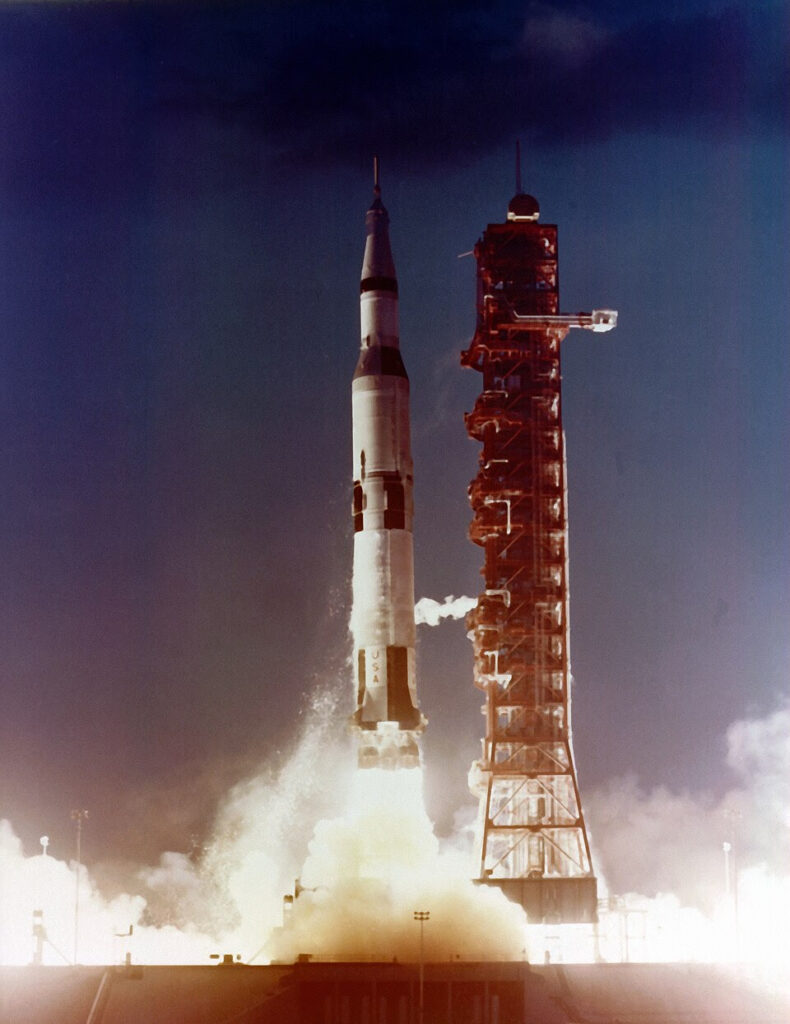
Cal Chamberlain, founder and inventor of SNAAP Transportation, began his journey in Chattanooga, Tennessee, with a passion for mathematics, systems thinking, and solving complex problems. A 1962 graduate of Parsons College in Fairfield, Iowa, Cal went on to become a Systems Engineer at General Dynamics, where he contributed to the tracking systems for the Apollo 4 mission—the first all-up launch of the Saturn V rocket. This early work in advanced computer science and large-scale systems engineering shaped his belief that even the most complex global challenges—like transportation, congestion, and urban mobility—can be solved through data, design, and innovation.
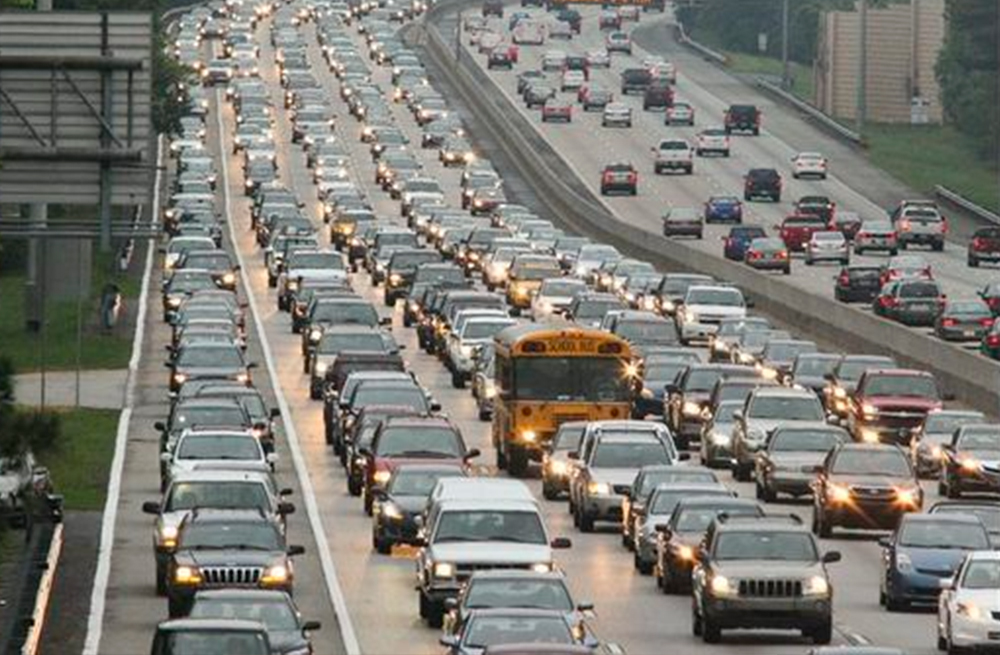
The vision for what would become SNAAP Transportation was born decades later in downtown Atlanta, where Cal, sitting in gridlocked traffic, observed a broken transportation system dominated by nearly 80% single-occupancy vehicles. Surrounded by underutilized high-occupancy vehicle (HOV) lanes and inconsistent rapid transit, he asked a defining question: “If we spent all these years getting people into cars, how do we get them out?” That moment sparked more than 25 years of research into traffic congestion, human behavior, urban infrastructure, and emerging mobility technologies—followed by five years of design and development to create a smarter, more efficient alternative.Cal Chamberlain, founder and inventor of SNAAP Transportation, began his journey in Chattanooga, Tennessee, with a passion for mathematics, systems thinking, and solving complex problems. A 1962 graduate of Parsons College in Fairfield, Iowa, Cal went on to become a Systems Engineer at General Dynamics, where he contributed to the tracking systems for the Apollo 4 mission—the first all-up launch of the Saturn V rocket. This early work in advanced computer science and large-scale systems engineering shaped his belief that even the most complex global challenges—like transportation, congestion, and urban mobility—can be solved through data, design, and innovation.
The result is SNAAP Transportation, evolved from The PT Solution—a next-generation Personal Rapid Transit (PRT) system designed to reduce congestion, increase efficiency, and transform how people move through cities. By integrating autonomous electric pods, intelligent guideway infrastructure, and enterprise-level software, SNAAP delivers scalable, sustainable, and on-demand mobility solutions. Today, Cal’s vision lives on through SNAAP’s mission to improve quality of life through accessibility, innovation, and system-wide transportation efficiency—captured in his enduring belief: “The Future Is Here; Take It for A Ride.”
Cal entered the workforce at a time when computer science was just beginning to emerge. As a Systems Engineer at General Dynamics, he worked on one of the most ambitious technological efforts in human history: helping develop tracking systems for the Apollo 4 mission—the first “all-up” launch of the Saturn V rocket.
This experience didn’t just place Cal at the forefront of innovation—it fundamentally shaped how he saw the world. Complex systems could be designed, modeled, and optimized. Massive challenges could be solved with the right combination of data, engineering, and vision.
But his greatest challenge—and opportunity—would come much closer to home.
Nearly 30 years ago, sitting in gridlocked traffic in downtown Atlanta, Cal found himself in a familiar yet frustrating position: alone in his car, surrounded by thousands of other single-occupancy vehicles.
To his left, a high-occupancy vehicle (HOV) lane sat underutilized.
To his right, a rapid transit bus lane moved only sporadically.
In that moment, he said out loud:
It wasn’t just frustration—it was clarity.
Cal recognized a fundamental inefficiency: nearly 80% of vehicles on roads worldwide carry only one person. The infrastructure existed. The demand existed. But the system itself was broken.
True to his nature, Cal didn’t jump to conclusions—he went deeper.
He spent the next 25 years studying the problem from every angle:
What emerged was not just an idea, but a fundamentally different approach to mobility.
Then came 5 years of intensive design and development—translating theory into a working system.
Out of decades of research and refinement, The PT Solution was born—what is now known as SNAAP Transportation.
SNAAP is not simply a new mode of transport. It is a rethinking of how people move:
It reflects Cal’s lifelong belief that the world’s most complex challenges can be solved—not by adding more—but by designing smarter.
Today, SNAAP Transportation stands as the realization of a single moment of clarity, backed by a lifetime of discipline, curiosity, and persistence.
Cal’s journey—from mathematician to systems engineer, from space exploration to transportation innovation—reminds us that breakthroughs don’t happen overnight. They are built over time, through relentless questioning and a refusal to accept the status quo.